

The Laurel Highlands 50K and My Origin Story

Note: This coming weekend is the Laurel Highlands 50K. Now, fourteen years later, I look back at my first ultramarathon. If you want to read my first blog post about it, please go to https://benrunsonbeer.wordpress.com/2012/06/10/laurel-highlands-ultra-50k/
-----
June 9, 2012
I have often wondered when exactly someone becomes an ultrarunner.
Is it the moment they register for their first ultra? Is it standing nervously at a starting line knowing they are about to travel farther on foot than they ever have before? Is it crossing the finish line with a buckle, medal, or race result to prove it?
Or does it happen somewhere out on the trail itself, in the quiet moments when nobody is watching, when the body begins to protest and the mind starts looking for exits, yet something deeper convinces you to continue moving forward?
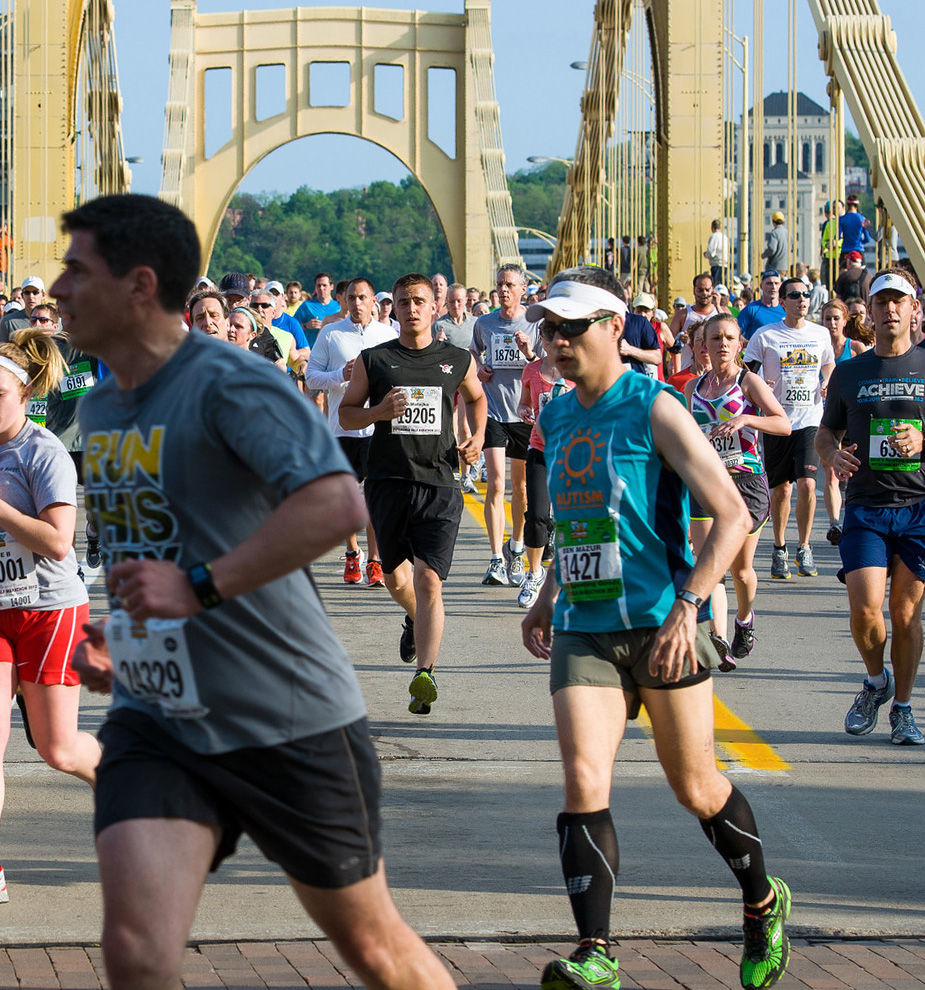
For me, the answer began on a humid June morning in Ohiopyle, Pennsylvania. Just a month earlier I had completed my first marathon at the Pittsburgh Marathon. At the time, that accomplishment felt enormous. Twenty-six point two miles had occupied my thoughts for months. Every training run had been focused on reaching that finish line. The marathon represented a destination, the culmination of a goal I had worked toward for years.
Then, somehow, I convinced myself that adding another five miles and moving the entire endeavor into the mountains sounded like a reasonable next step.
That decision led me to the Laurel Highlands 50K.
Today, Laurel Highlands is one of Pennsylvania's most iconic ultramarathons, and at fifty years, one of the oldest ultras in the United States. At the time, however, I knew remarkably little about what I was getting myself into. I had read race reports, studied elevation profiles, and scoured internet forums searching for any scrap of information I could find. Every veteran runner seemed to describe the course with a mixture of admiration and trauma.
That should have been my first warning.
Instead, I interpreted it as encouragement.
Chapter 1: The Dangerous Confidence of a Man With a Spreadsheet

As race day approached, my excitement steadily grew. This wasn't simply another race. It felt like an expedition. Unlike road marathons where aid stations appeared every few miles like clockwork, this race required preparation. I carefully assembled my gear and nutrition plan. My waist pack bulged with enough calories to sustain a small village. Energy gels occupied every available pocket. Electrolyte tablets rattled around in plastic bags. A bottle of Hammer Perpetuem sat ready for deployment. Somewhere in the mix was a banana that, by the end of the day, would bear witness to the consequences of poor packing decisions and becoming a new natural state called “grey goo”.
I had spreadsheets. Plural. Not a spreadsheet. Spreadsheets. Enough color-coded tabs to convince an outside observer that I was either preparing for an ultramarathon or step-by-step procedure attempting to invade Rome from Africa via a ridiculously circuitous route along the Alps.
I had pace charts. Projected split times. Contingency plans. Backup contingency plans.
A nutrition schedule precise enough to envy Richard Simmons and his “Deal-a-Meal” nutrition plans.
What I did not possess was the one thing that would have been truly useful. Any firsthand knowledge whatsoever.
But I did had a goal.
Seven hours and fifteen minutes.
It seemed so reasonable. So attainable. So beautifully precise. Not too aggressive. Not too conservative. A finish time that seemed challenging yet realistic for a first attempt. So specific. So authoritative. The sort of number one presents when they have conducted serious analysis and Past Ben loved serious analysis.
Looking back, I smile at the misaligned confidence contained within that number. It never occurred to me that assigning a finish time before seeing the course was like estimating the differences of how long it would take to fight various species of bears after reading its Wikipedia page.

Yet, Past Ben had spreadsheets. Past Ben had pace charts. Past Ben had projected segment times. Past Ben had enough color-coded planning documents to convince an outside observer that he was coordinating the Normandy invasion. Past Ben had all that and a bag of chips.
What Past Ben did not have was experience.
Past Ben had never run an ultramarathon. Past Ben had simply read about ultramarathons on the internet and concluded he understood them. Which, as history repeatedly demonstrates, is an excellent way to become accidentally overconfident.
The mountains had not yet been consulted. Had they been consulted, they likely would have responded with prolonged laughter.
The evening before the race, runners gathered for packet pickup and the pre-race briefing. There is a unique energy present at ultramarathons that differs from any other sporting event. Road races tend to feel polished and orderly. Ultras feel more like a gathering of adventurers preparing for a shared expedition into the unknown.
People compared hydration strategies. Veterans discussed sections of trail by name. Conversations casually included phrases like "the climb isn't terrible" and "that's where my race last year fell apart." Everyone seemed to possess stories. As a newcomer, I absorbed every word.
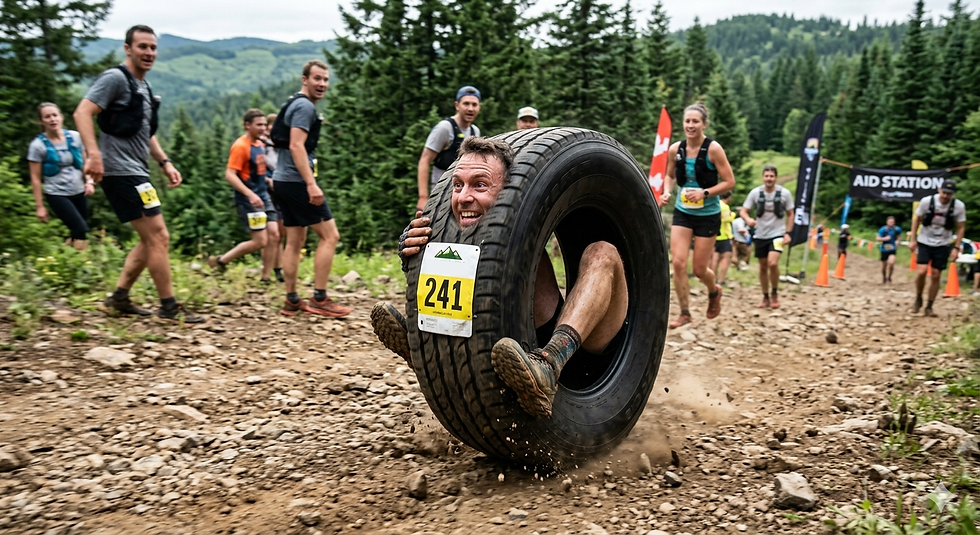
Afterward, I joined the traditional pre-race ritual of consuming an irresponsible amount of pasta. The logic was simple: if carbohydrates are good, then more carbohydrates must be better. By the end of dinner I felt less like an athlete and more like the Michelin Man. "I'm Metamorpho! Change form into a tire and roll down the hill!"
CHAPTER 2: The Motivational Speaker from the Guy in the Crows Nest of the ‘Titanic’
The next morning began long before sunrise. I remember standing in the darkness surrounded by runners carrying headlamps and coffee cups. The air felt cool and damp. A nervous energy lingered over the crowd as we boarded buses for the trip to the start line in Ohiopyle.
I happened to sit next to a woman who had attempted the race previously and failed to finish. Naturally, this made her the ideal person to speak with before my first ultramarathon. This would be like boarding a commercial flight and discovering your seatmate was a survivor of three aviation disasters who immediately says: "Oh, you're going to love what happens during the final descent and the engines break off! [Chef’s Kiss] ”
As the bus wound through the Laurel Highlands, she casually described the course using the tone one might reserve for discussing about a serial killer who had recently been released back into the community. “The climbs were relentless. The footing was terrible. Many strong runners underestimated the race.”
At one point she mentioned that Laurel Highlands was one of the toughest 50Ks around. Wonderful. Exactly the motivational speech I was looking for. I appreciated her honesty. I would have appreciated lies more.
With every mile the bus traveled, my confidence diminished only slightly. Still, Past Ben continued reviewing his pace projections. Past Ben even stopped listening. Past Ben believed that his numbers were real.
Yet, the woman had finished exactly zero Laurel Highlands 50Ks. Past Ben had completed exactly zero Laurel Highlands 50Ks. One of them should have been considered the expert. Past Ben selected himself.
I was the man who had recently run a marathon and thought, "Maybe I should try something longer."

CHAPTER 3: My Fate at Gate to Eight
When we finally arrived in Ohiopyle, dawn had long broke over the Youghiogheny River Gorge. The small town buzzed with activity as runners made final preparations. Shoes were adjusted. Bottles were filled. Last-minute bathroom lines at the bathhouse above the parking lot stretched to impressive lengths.
I wandered through the crowd trying to project confidence while internally conducting a full-scale audit of every life decision that had brought me to that moment.
Eventually there was nothing left to do except start. The countdown began. The nervous chatter faded.
Then we were off. The race began.
Within minutes the trail made its intentions clear. Many races introduce themselves politely. The Laurel Highlands Trail instead burst through the wall like the Kool-Aid Man carrying a geology textbook. "Ohhhh... YEAHH!"
The opening climbs, known by locals as “Gate-to-8” out of Ohiopyle was steep, humid, rocky, and seemingly designed by someone who had once been insulted by runners.

There was no easing into the experience. No opportunity to settle into a rhythm. No transitional period. The trail simply pointed upward and said: "Let's see how serious you are."
Roots crossed the trail in every direction. Rocks emerged from the ground with the frequency of a whack-a-mole machine. The humidity wrapped around the forest like a moist wool blanket. Moist!
Around me, runners established their positions. Some surged ahead with confidence. Others settled into hiking strategies that suggested they possessed wisdom I did not yet understand.
I stubbornly continued running whenever possible.
This, too, would become an educational experience.
Just before Baughman Rock Overlook I would trip over a root and be reminded that sightseeing required caution.
The trail demanded attention. Constant attention.
On roads, it is possible to drift mentally for miles. You can admire scenery, think about work, replay conversations, or daydream about post-race meals.
The Laurel Highlands Trail does not permit such luxuries.
Every footstep matters. Every rock presents consequences. Every root waits patiently for a moment of distraction.
Past Ben had allocated approximately forty-five minutes to this section called Gate-to-8.
The estimate had been generated by a man who, at the time, possessed exactly as much Laurel Highlands 50K experience as my banana. The mountain reviewed this estimate and rejected it for insufficient realism.
For perhaps the first time in my life, I was completely immersed in a single activity. The trail required my full attention. Concerns about work, responsibilities, and everyday life disappeared into the background. There was only the next step, the next climb, and the next concrete mile marker. Before long I realized the race was teaching me something important. Success would not simply depend upon fitness. Plenty of runners possessed fitness.
Success depended upon presence.
Without realizing it, I had entered one of the things that would ultimately draw me back to ultrarunning again and again for years to come.
Chapter 4: The Point Where I Mistook Competence for Invincibility
Despite the physical effort, I found myself captivated by the landscape. The Laurel Highlands Trail is one of Pennsylvania's treasures. Massive ferns lined the corridor. Sunlight filtered through dense forest canopies. Rhododendrons formed tunnels around sections of trail. Every turn revealed another scene that seemed pulled from a postcard.
At times it felt less like a race and more like an opportunity to explore one of the wildest corners of the Commonwealth. By the time I reached the first major aid station, something unexpected had happened.
I had stopped worrying about finishing.
Not because I was certain I would finish, but because the trail itself had become all-consuming.

The Laurel Highlands Trail much like many trails has a way of narrowing your world. Life becomes wonderfully simple. You eat when you're hungry. You drink when you're thirsty. You move forward because the finish line exists somewhere ahead. The endless noise of everyday life—the deadlines, obligations, emails, and responsibilities—gradually fades into the background.
The forest becomes your entire universe.
I settled into a rhythm.
The early climbs had thinned the field enough that runners were now scattered along the ridge. Sometimes I would spend several minutes running completely alone before encountering another participant. Then I might exchange a few words with someone, leapfrogging back and forth over the course of several miles before eventually separating again.
Those brief interactions felt oddly significant.
Ultrarunners have a way of stripping away superficial conversation. Nobody cared what you did for a living. Nobody asked where you went to school. Nobody discussed politics, sports, or current events.
The conversations revolved around the essentials.
"How are your legs?"
"Have you been eating?"
"How are the climbs treating you?"
"You okay?"
Simple questions. Yet at the time they were important questions. Questions asked by people who understood exactly what everyone else on that trail was experiencing.

Aid stations felt like tiny frontier settlements scattered across an otherwise lawless wilderness.
Volunteers possessed the supernatural ability to diagnose your problems before you spoke.
"You need salt."
"I think I'm okay."
"No, you need salt."
Five minutes later I would discover they were correct.
Every time.
It was less an aid station and more a cult devoted entirely to The Potato.
The potato was everywhere. Boiled potatoes. Salted potatoes. Potatoes cut into cubes. Potatoes sleeping in blankets called pierogies. Potatoes sitting in giant bowls like sacred offerings to some ancient Appalachian deity.
The volunteers spoke of potatoes with the quiet confidence of people who had witnessed miracles.
"You need a potato."
"My stomach feels a little off." "Potato."
"I think I'm cramping."
"Definitely potato."
"My marriage is struggling."
"Have you tried potato?"
The remarkable thing was that they were right.
Every.
Single.
Time.
Within minutes I would feel better and head back onto the trail, carrying with me one more piece of evidence that The Potato was perhaps the most powerful force in ultrarunning.
Honestly, sign me up for the newsletter. Tell me where the meetings are held. I'll sit in a folding chair in a church basement and listen to a man named Brad explain the restorative powers of Russet potatoes from Cambria County.
I'll buy the pamphlets.
I'll tithe in hash browns.
If someone had approached me around mile twenty and said, "Would you like to hear the good news about our Lord and Savior, the Potato?" I would have interrupted them halfway through the sentence and asked where to donate. The aid stations weren't merely feeding runners. They were quietly converting them.

Leaving each aid station felt like launching back into an expedition.
The trail would swallow you again, and before long the sounds of people disappeared behind the trees.
By mile twenty, something unexpected happened. I felt good.
Not surviving. Not hanging on.
Good.
The major climbs were behind me. My nutrition plan appeared to be working. My stomach felt stable. My legs remained responsive.
The trail suddenly felt manageable.
This was the exact moment the race became dangerous. Because confidence is a useful tool in ultrarunning. Overconfidence is a different matter entirely.
I began doing math. Never do math during an ultramarathon. Nothing good comes from race math. Race math is how runners convince themselves they are invincible approximately thirty minutes before disaster strikes.
At an aid station I compared my actual pace against my projections.
I was significantly ahead of schedule. The possibility emerged. “What if I finished under seven hours?” Entirely new possibilities entered my mind.
Chapter 4: The Mountains Read My Résumé and Were Unimpressed
That was when the race changed.
Until that point, my objective had been straightforward. Finish.
Now another thought emerged. What if I could do more than finish?
The idea arrived quietly at first. A harmless little thought. A curious possibility.
Then someone at an aid station mentioned my position. I don't remember the exact conversation, only the effect it had. Apparently I was running somewhere near the top twenty-five.
Top twenty-five.
The phrase echoed in my head as I left the aid station.
Top twenty-five?!
Surely not.
There had to be some mistake.
Or top twenty-five runners named Benjamin?
Or top twenty-five runners carrying a rapidly deteriorating banana.
Yet the possibility lodged itself in my brain.
And once an ambitious thought enters the brain of an endurance athlete, it begins reproducing like invasive bamboo.
Suddenly every runner ahead became prey.
Every glimpse of another participant through the trees triggered calculations. Could I catch them? How much time separated us? Was I gaining? Was I losing? The race had evolved from an exploration into a pursuit.
For several miles I moved through the forest with growing confidence.
The trail seemed less intimidating now.
The rocks and roots remained exactly where they had always been, but my relationship with them had changed. Earlier in the day they felt like obstacles. Now they felt like dance partners.
Or perhaps accomplices.

Either way, we were getting along.
Hopped over them.
Flowed through technical sections with a confidence I certainly had not possessed at the start.
The miles clicked by almost effortlessly. I crossed streams. Traversed long ridgelines where the forest stretched endlessly in every direction.
Everywhere I looked, Pennsylvania unfolded in shades of green. Layer upon layer of mountains rolled toward the horizon until the ridges dissolved into blue haze. It felt impossibly vast.
The sort of landscape that makes you briefly contemplate your place in the universe.
Or in my case, begin mentally calculating finishing times.
Past Ben was not a complicated man.
The mountains seemed infinite. My confidence seemed equally infinite.
And somewhere within that vast landscape, a realization began taking shape.
I wasn't merely surviving my first ultramarathon.
I was racing it. That thought energized me.
It also blinded me.
The transformation was subtle. At first I was simply having a good day. Then I was having a really good day.
Then I began passing people. Then I began looking for people to pass.
Soon every distant runner visible through the trees became a personal challenge. A side quest. A collectible. The entire forest had somehow transformed into Mario Kart.
Past Ben had entered what experts refer to as "the danger zone."
Not because he was tired. Not because he was injured. But because he had started believing his own narrative. The internal monologue became increasingly ridiculous.
"Maybe I was better at this than I thought. Maybe I was naturally gifted. Maybe I had secretly been an ultrarunner all along. Maybe future documentaries would discuss this performance".
Meanwhile the Laurel Highlands Trail watched patiently from beneath thousands of years of rock and dirt. The trail had seen this before. Many times.
For fifty years runners had entered these mountains, experienced a strong stretch of miles, and begun drafting acceptance speeches for accomplishments they had not yet achieved.
The mountains never interrupted. They simply waited. Confident that reality would eventually rejoin the conversation.
Unfortunately, Past Ben interpreted their silence as agreement.
Chapter 6: Negotiating with My Body That No Longer Recognize My Authority
Around mile twenty-eight my body scheduled an emergency board meeting. The calves voted against continued participation. It was the sort of cramp that causes you to briefly wonder whether your skeleton is attempting to escape. The quadriceps abstained. My stomach issued a formal declaration of independence. Energy gels became disgusting. Water became suspicious. Food became theoretical. Meanwhile my brain, which had caused this entire situation, remained suspiciously absent from the proceedings. It was a hostile corporate takeover conducted entirely by muscle tissue.

The trail sensed weakness.
Or at least it felt that way.
The same rocks and roots I had danced across earlier now appeared to have multiplied. Every technical section seemed more difficult than I remembered. The same rocks I had effortlessly bounded over earlier now appeared strategically placed. Every root had become a personal enemy. Every hill seemed to have grown.
The Laurel Highlands Trail had transformed into a living entity whose sole purpose was to expose my arrogance. And frankly, it was doing an excellent job.
But in honesty, The Laurel Highlands Trail had not changed.
I had.
For the first time all day, I stopped thinking about finish times. I stopped thinking about placement. I stopped thinking about goals. The race became much simpler. Get to the next aid station.
Then get to the next mile marker. Then get to the next bend in the trail.
Just keep moving.
This is the moment I believe every ultrarunner eventually encounters. The point where the race strips away ambition and exposes intention.
Why are you here?
Why are you still moving?
Why continue when walking away would be easier?
I wish I could provide a profound answer.
The truth is considerably less elegant.
I kept moving because forward was the only direction that made sense.
The finish line still existed.
Therefore, I would continue toward it.
One step.
Then another.
Then another.
The pace slowed.
The suffering increased.
Yet strangely, a sense of calm settled over me.
The uncertainty that had accompanied me all morning disappeared.
I no longer wondered whether I belonged.
I no longer questioned whether I was capable.
Those questions had already been answered.
Now the task was simply to finish what I had started.
The final three miles lasted approximately four years. Scientists may dispute this estimate. But the scientists were not there. Every turn appeared to be the finish. Every turn lied. Every slight incline felt like the North Face of the Eiger.
I checked my watch. Two minutes had passed. I checked again. Another ninety seconds. Time itself appeared to be malfunctioning.
At one point I became convinced the trail was looping back on itself in an effort to study me.
The finish line had become less of a location and more of a philosophical concept. Like world peace. Or affordable healthcare. People claimed it existed. I had yet to see evidence.
Chapter 7: A Folding Chair Nearly Finished What the Mountains Could Not
Then suddenly there were people.
Voices.
Applause.
Civilization.
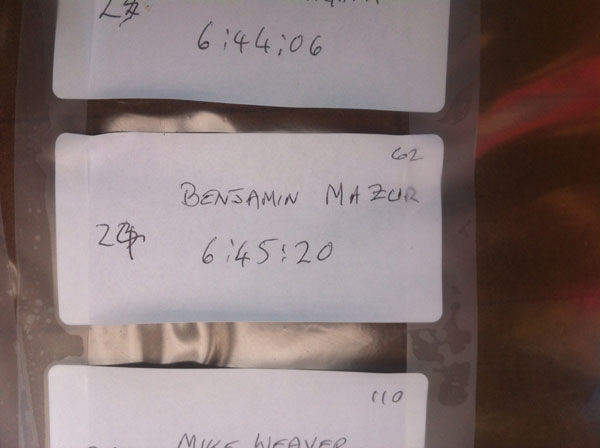
The finish line appeared. I crossed in 6:45:20. Thirty minutes faster than my goal. Twenty-fourth overall.
For several moments I simply stood there.
Not celebrating. Not reflecting. Not posing for photographs. Just standing. The same way a laptop remains powered on for a few seconds after selecting "Shut Down."
Meanwhile every muscle in my body was filing complaints with management.
Six hours and forty-five minutes.
Thirty minutes faster than my original goal.
Twenty-four overall.
The numbers themselves were gratifying, but they felt strangely secondary.
What I remember most is the overwhelming sensation of relief.
The pressure was gone. The uncertainty was gone. The challenge that had consumed my thoughts for months was suddenly complete.
Then, almost immediately, my body reminded me that every accomplishment carries consequences.
The cramps returned with renewed enthusiasm. Apparently my muscles had signed a temporary ceasefire agreement that expired at the finish line.
Walking became difficult. Sitting became risky. Standing back up became an engineering problem. After successfully traveling thirty-one miles through the mountains, I found myself nearly defeated by a folding chair.
The finish area was filled with fellow runners sharing similar experiences.
Some looked fresh.
Others looked as though they had recently survived a maritime disaster.
Everyone wore the same expression.
A mixture of exhaustion, satisfaction, disbelief, and pride.
The universal look of people who had willingly chosen to do something difficult and were already forgetting how difficult it had actually been.
I ate. I drank. I attempted recovery. [Which in of itself is an amusing journey.]
Mostly, however, I reflected.
The mountains that had seemed intimidating that morning now felt familiar.
The trail that had appeared impossible now existed behind me.
The challenge that had once felt enormous was suddenly part of my history.
Somewhere along those thirty-one miles, something had shifted.
I wasn't entirely sure what it was yet.
But I knew it mattered.

Chapter 8: The Origin Story You Regret You Asked
Looking back now, more than a decade later, I can confidently say the most important thing I brought home from Laurel Highlands was not my finishing time.
It wasn't my placement.
It wasn't even the accomplishment of completing thirty-one miles.
The real prize was a change in perspective.
Before that race, I viewed ultrarunners as something different.
They were tougher.
More experienced.
More resilient.
Possessing some mysterious quality that allowed them to accomplish things that ordinary runners could not.
I believed there was a line separating marathoners from ultrarunners.
A barrier that only certain people could cross.
The Laurel Highlands 50K taught me otherwise.
The runners around me were not superheroes.
They were ordinary people doing extraordinary things.
Teachers. Engineers. Parents. Students. Retirees.
Ultrarunners weren't different. They simply kept going. They got tired and continued. They doubted themselves and continued. They got nauseous and continued. They suffered and continued.
The secret turned out to be profoundly unmarketable. Persistence.
Which is unfortunate because "Relentlessly Continue Forward Despite Evidence to the Contrary" would make a terrible motivational poster.
Throughout the day I had experienced fear, uncertainty, confidence, overconfidence, pain, nausea, cramps, and exhaustion.
None of those things prevented forward progress.
Not because I was uniquely tough.
Not because I possessed unusual talent.
But because I learned that endurance is often less about physical ability than it is about persistence.
You simply continue.
Again and again.
One step at a time.
That lesson would shape nearly every adventure that followed.
The countless ultramarathons.
The mountain races.
The distances that most say, “I don’t like to drive that far”.
The impossible-looking goals that somehow became achievable once broken into smaller pieces.
Many years later, people occasionally ask how I became involved in ultrarunning. They assume there must have been a defining moment. Some grand revelation. Some dramatic transformation.
There wasn't.
At least not in the way people imagine.
The transformation happened quietly. Somewhere on a rocky trail in the Laurel Highlands. Somewhere between the fear of the starting line and the relief of the finish. Somewhere between being a marathoner attempting an ultramarathon and becoming an ultrarunner.
When I arrived in Ohiopyle that morning, I was hoping to complete my first ultra.
When I left, I was already wondering what came next.
That should have been concerning.
Instead, it felt inevitable.
The mountains had changed me.
And they weren't finished yet.


Comments